
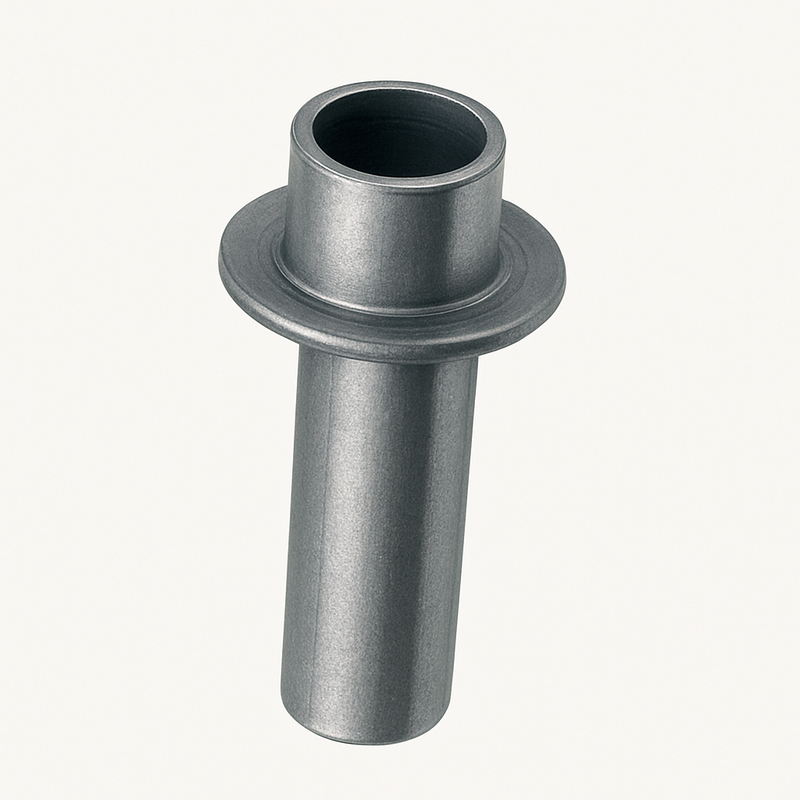
The DIN 7340 standard and tubular rivets are key terms in the fastening industry, essential for creating robust and reliable connections. In this article, we will explore their technical features, the significance of the DIN 7340 standard, and the role of companies like Rona Kranj d.o.o. in their manufacture.
What is the DIN 7340 Standard?
DIN, short for Deutsches Institut für Normung, is Germany’s national standardization body responsible for developing and publishing technical standards. These standards ensure quality, safety, and global compatibility.
DIN 7340 specifically covers tubular rivets. This standard precisely defines:
- Dimensions: standardized diameter, rivet length, hole diameter, and head size, ensuring interchangeability and compatibility with automated processes.
- Materials: approved materials include steel (zinc-plated, stainless), aluminum, brass, and copper, specifying mechanical properties like tensile strength.
- Tolerances: strict dimensional tolerances to ensure precision and product quality.
- Surface treatments: requirements for coatings such as zinc plating or chrome plating to enhance corrosion resistance and aesthetics.
Compliance with DIN 7340 is critical for guaranteeing the reliability and functionality of tubular rivets in various applications.
Tubular Rivets: Technical Details
Tubular rivets are hollow fastening elements with unique benefits over solid rivets.
Key technical features:
- Hollow structure and deformation: the central hole allows the material to expand and deform radially and axially during riveting, creating a strong, long-lasting joint. The riveting process involves inserting the rivet into a drilled hole and deforming the end (typically by hammering or pressing) to form a second head.
- Stress relief: the hollow design distributes stress more evenly, especially important when joining brittle or thin-walled materials, preventing damage.
- Lightweight: the hollowness reduces weight—crucial in automotive and aerospace industries focused on weight reduction.
- Routing and guiding capabilities: the hollow core can route cables, wires, or small tubes and serve as guides for moving parts.
- Manufacturing: tubular rivets are produced via cold forming or machining. Cold forming yields high precision and optimal mechanical properties.
Mechanical properties and material choices:
The material depends on tensile strength, shear strength, corrosion resistance, and electrical conductivity:
- Steel (zinc-plated, stainless): high strength and durability; stainless variants (A2, A4) offer excellent corrosion resistance.
- Aluminum: lightweight and corrosion-resistant but less strong than steel.
- Brass/Copper: excellent electrical conductivity and corrosion resistance; used in electrical and decorative applications.
Applications of Tubular Rivets
Tubular rivets are highly versatile and used across multiple industries:
- Automotive: interior panels, brake systems, chassis components.
- Electronics: PCB components, enclosures, heatsinks—requiring thermal or electrical performance.
- Furniture: wood and metal frame connections where aesthetics and strength matter.
Textile and leather goods: attaching buttons, buckles, handles on garments, bags, shoes.
- Toys: joining plastic and metal parts, providing safe, lightweight fastening.
- Appliances: internal fixing in washing machines, refrigerators, ovens.
In the production of tubular rivets, Slovenian firm Rona Kranj d.o.o. stands out. This family-run business has manufactured DIN 7340 tubular rivets for 40 years, using precision-drawn tubing. Their extensive experience and continuous production improvements yield reliable, technically advanced products essential for industrial applications.